
UFC Betting Integrity and Fight Market Protection
 Available in US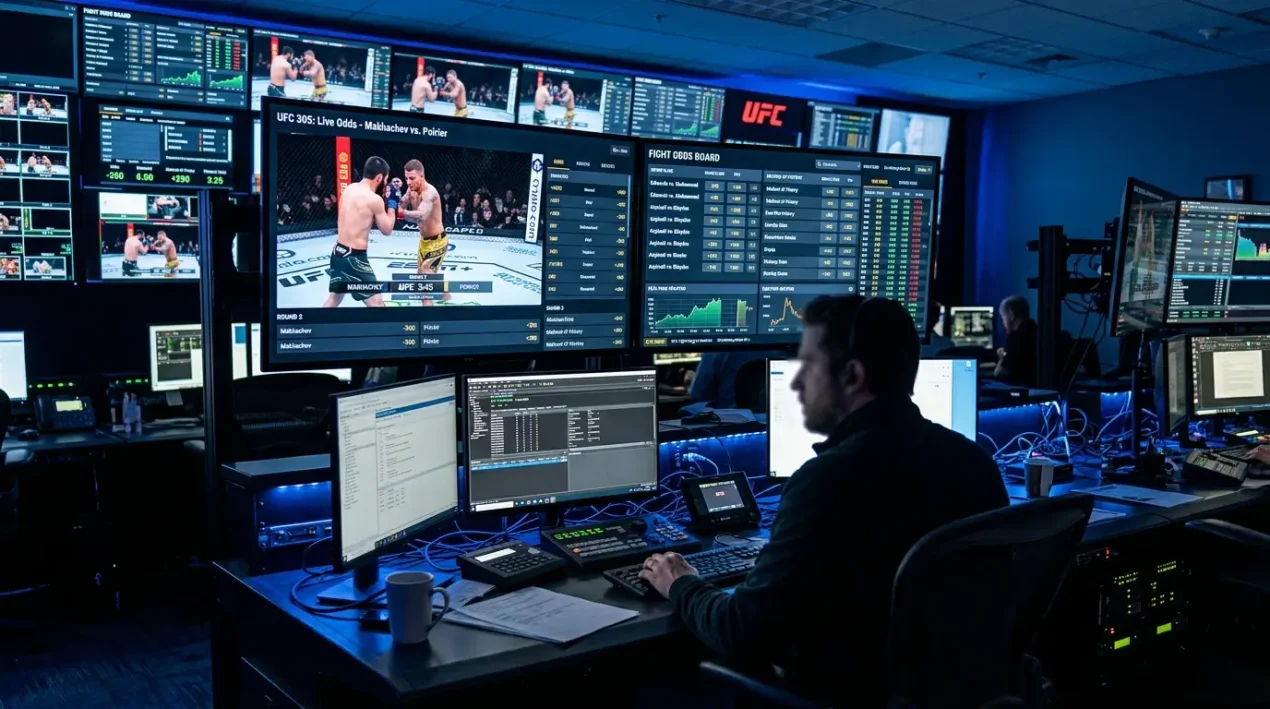
I write about integrity not to alarm you but because understanding how the UFC polices its betting markets makes you a smarter bettor. If you know what clean odds look like, you will recognise when something is off – and knowing when to walk away from a bet is just as valuable as knowing when to place one.
IC360 Monitoring Details: Safeguarding UFC Betting Market Integrity
Every time a UFC event takes place, from the first prelim fight to the main event, a system called IC360 is tracking the betting activity. IC360 is run by Sportradar, the same company that provides integrity services to the NFL, NBA, and FIFA. Dana White has described the arrangement bluntly: they watch every fight that happens in the UFC, monitoring all of the betting, and he considers them the best in the business. That is not corporate posturing – Sportradar’s integrity services division grew its revenue by 103% year on year in Q3 2025, hitting $4.2 million for the quarter alone. The investment reflects how seriously the sports betting industry takes integrity monitoring.
What IC360 actually does is compare real-time betting patterns against expected models. Every fight has a predicted odds movement range based on historical data, fighter profiles, and market conditions. When the actual movement deviates beyond a threshold, the system flags it for human review. The humans then determine whether the movement has a legitimate explanation – a late injury report, a viral training clip, sharp money from a known syndicate – or whether the pattern suggests something more concerning.
The system is not perfect. It catches anomalies after they occur, not before. And it relies on bookmakers cooperating by sharing their data, which most licensed operators do but offshore platforms rarely bother with. For UK punters betting through UKGC-licensed sites, the IC360 layer provides a meaningful backstop. For anyone betting offshore, that safety net does not exist.
Mark Shapiro, President of TKO Group Holdings (UFC’s parent company), has put the scale in perspective: across three years, the organisation is aware of investigations into only two isolated incidents, against a backdrop of nearly 500 fights annually. That is a low incidence rate by any measure, though even two incidents are two too many for a sport that depends on the public’s belief in genuine competition.
Recent Cases: Dulgarian, Krause and the Bookmaker Response
I keep a file of every UFC integrity incident I can find, and it is shorter than most people expect. The Dulgarian case from 2025 is the most dramatic recent example. That -250 to -130 swing was not a normal line correction – it was a collapse. Odds on UFC fights routinely shift by 20 or 30 points as information flows into the market, but a 120-point swing in a matter of hours, with no reported injury or public news to justify it, falls outside every model I have seen. The three bookmakers who voided bets did so without confirming exactly why, but the timing and scale spoke for themselves.
The James Krause situation from 2022-2023 unfolded differently. Krause, a UFC fighter and coach, was accused of involvement in suspicious betting activity tied to fights involving fighters he coached. The investigation led to his indefinite suspension and tightened the UFC’s relationship with IC360. What made the Krause case significant was not the scale of the alleged activity but the structural question it raised: when a coach has intimate knowledge of a fighter’s condition, preparation, and game plan, what stops that information from reaching the betting market? The answer, post-Krause, is stricter monitoring, expanded insider trading rules, and faster bookmaker response times.
For your bets specifically, these cases carry a practical lesson. If you see a dramatic, unexplained line shift in the final hours before a fight, do not treat it as a tip. Treat it as a red flag. Either sharp money knows something the public does not – which means you are on the wrong side – or the fight’s integrity itself is in question. Neither scenario ends well for the casual bettor who chases the movement.
Fighter Pay and Its Link to Integrity Risk
There is a number that sits uncomfortably at the heart of every integrity conversation in the UFC. Fighters receive approximately 16-20% of the organisation’s revenue. In the NBA, NFL, and NHL, the equivalent figure is roughly 50%. That gap is not just a labour dispute – it is a structural vulnerability. N. Jeremi Duru, a Professor of Sports Law at American University, framed it starkly when he said that the possibility of predetermined outcomes in sport represents an existential threat, because if serious doubt is sown about true competition, it is no longer even sport.
I am not suggesting that fighter pay directly causes integrity violations. The overwhelming majority of UFC athletes compete with absolute honesty, often for purses that barely cover their training costs. But when a prelim fighter earns $12,000 to show and $12,000 to win – before paying coaches, gym fees, travel, and taxes – the financial incentive to resist outside offers is structurally weaker than in sports where the minimum salary is six figures. This is a systemic issue, not an individual one, and it is the reason integrity monitoring exists in the first place.
From a betting perspective, the pay disparity creates a practical consideration. Fights lower on the card, where purses are smallest and public attention is lowest, are theoretically more vulnerable than main events where the spotlight, the monitoring, and the stakes for the fighters themselves are all higher. I do not avoid prelim bets because of integrity concerns – the actual incidence rate is extremely low – but I do pay closer attention to anomalous line movements on undercard fights than I do on main events.
What Smart Bettors Take From the Integrity Landscape
UFC betting integrity is imperfect but improving. IC360 provides a level of monitoring that did not exist five years ago. Bookmakers have shown a willingness to void bets when the evidence warrants it, which protects punters even when it costs the house money. Fighter pay remains a structural concern, but the regulatory infrastructure around the sport is evolving faster than the criticism suggests. For your purposes as a bettor, the takeaway is practical: bet on UKGC-licensed platforms where IC360 data flows through, watch for unexplained line shifts as warning signals rather than invitations, and trust that the system – while not foolproof – provides a meaningful layer of protection that most combat sports cannot match.
Are UFC fights ever fixed?
Confirmed cases of UFC fight fixing are extremely rare. The organisation has acknowledged investigations into two isolated incidents over a three-year span, against a backdrop of nearly 500 fights per year. The IC360 monitoring system flags suspicious odds movements on every bout, and bookmakers have voided bets when integrity concerns arise. While no sport can guarantee zero corruption, the UFC’s monitoring infrastructure is among the more robust in combat sports.
What should I do if I notice suspicious UFC odds movement?
Do not chase the movement. A sudden, unexplained line shift – particularly one that moves a heavy favourite toward pick-em territory with no public injury or news – is a red flag, not an opportunity. If the movement reflects sharp money, you are likely on the wrong side. If it reflects an integrity issue, the fight itself may be compromised. In either case, the smartest response is to pass on the fight entirely and look for value elsewhere on the card.
This material was created by the OCTAPICKS team.
Related posts
UK UFC Audience Demographics and Betting Market Growth

UFC Betting Record Keeping and ROI Tracking