UFC Weigh-In Signals and Betting Odds Impact
 Available in US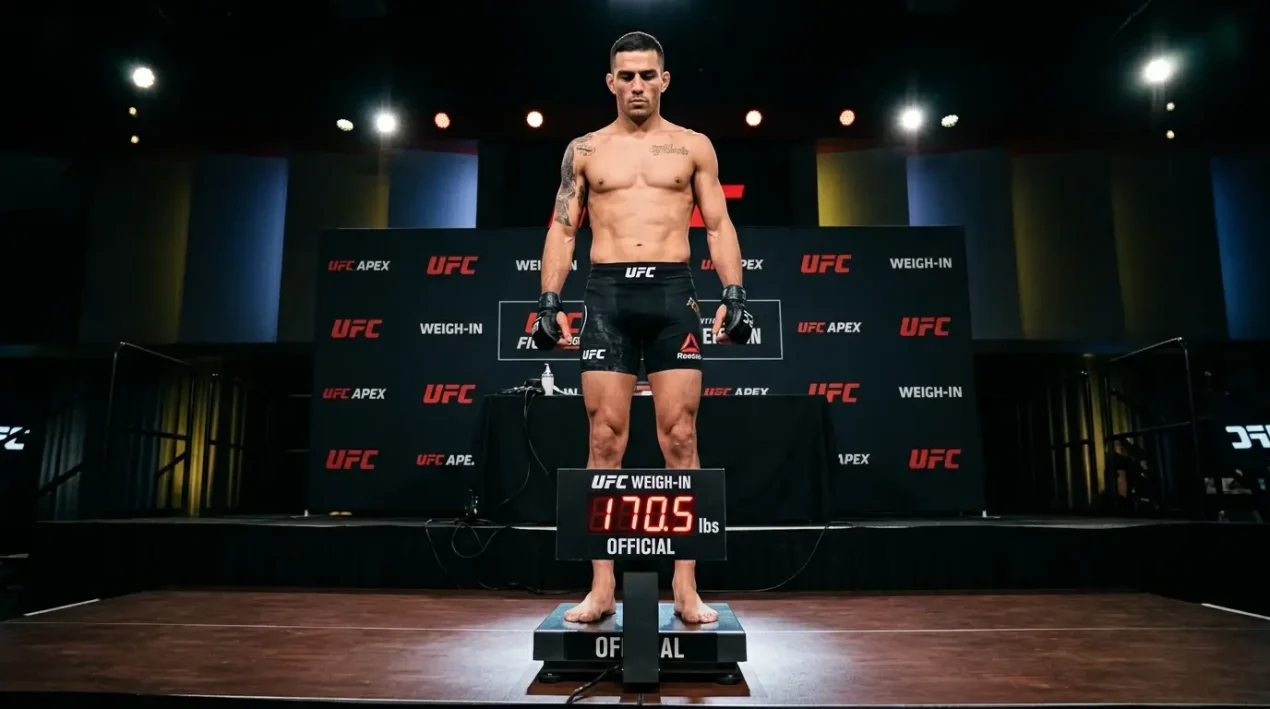
Weight cuts are the hidden tax of mixed martial arts. Fighters routinely shed 10–15% of their body weight in the week before a bout, dehydrating themselves to make a contractual limit. The toll this process takes varies enormously between individuals, and the fighters who struggle visibly at the weigh-in often struggle invisibly inside the cage. This guide covers what to look for, how missed weight changes the betting landscape, and how to time your bets around the weigh-in window.
Missed Weight Consequences: Impact on Fighter Odds and Markets
I had a three-unit bet riding on a bantamweight favourite who missed weight by two pounds. The fight went ahead as a catchweight, my bet was still live, and the fighter who missed weight won by second-round TKO. I cashed the bet, but the experience left me uneasy — because the data told me I had been lucky, not smart.
When a fighter misses weight, the immediate consequence is financial: they forfeit 20–30% of their purse to the opponent. But the betting implications are more complex. A fighter who misses weight has failed the most basic preparation task of the fight week, which raises questions about their discipline, their camp, and their physical condition. Historically, fighters who miss weight win their bouts at a lower rate than those who make weight — the failed cut is a signal that something in the preparation went wrong, and that something often manifests as reduced cardio, slower reactions, or diminished power after a brutal rehydration process.
The odds typically shift against the fighter who misses weight, but the extent of the shift depends on how much weight they missed and which fighter it is. A champion or a significant favourite who misses by half a pound might see only a minor adjustment — the market gives established fighters the benefit of the doubt. A lesser-known underdog who misses by three pounds will see a dramatic shift, sometimes enough to flip the line entirely. That 23% underdog-to-favourite flip in the last 48 hours often coincides with weight-miss announcements.
For accumulator bettors, a missed weight creates an additional complication. Some bookmakers void bets when a fight moves to catchweight; others keep the bet live. Check your platform’s specific rules on catchweight fights before the weigh-in — not after, when the stress of a voided acca leg clouds your judgment.
What to Look for at a UFC Weigh-In
The official weigh-in lasts about thirty seconds per fighter. In that window, you can gather more useful information than a week’s worth of social media hype provides.
Facial hollowness is the most reliable visual cue. A fighter who has cut an extreme amount of weight will show sunken cheeks, pronounced eye sockets, and a gaunt appearance that looks markedly different from their usual fight-week photos. This level of dehydration indicates a difficult cut, which correlates with reduced performance — particularly in cardio-dependent divisions like lightweight and welterweight. I compare weigh-in photos to a fighter’s walk-around weight (usually available through interviews or social media posts from earlier in camp) to assess how dramatic the cut was.
Movement quality on the scale is the second signal. Some fighters step onto the scale briskly, pose, and step off with energy. Others move slowly, brace themselves, and look unsteady. Sluggish movement at the weigh-in is a sign that the dehydration process has taken a significant physical toll. A fighter who cannot stand steadily on a scale for ten seconds is a fighter whose reflexes and footwork may be compromised 24 hours later, even after rehydrating.
The stare-down — the face-off between opponents that follows the weigh-in — offers behavioural signals. A fighter who avoids eye contact, appears passive, or looks physically drained during the stare-down may be more affected by the cut than their odds suggest. This is subjective analysis, and I weight it lightly compared to the physical cues, but it contributes to the overall picture.
The timing of the weigh-in matters too. Official UFC weigh-ins have a window — fighters can weigh in early or at the last minute. A fighter who weighs in at the very end of the window often needed every extra minute to make weight. Early weigh-ins suggest a comfortable cut. This detail is reported by credentialed media and tracking accounts on social media, and it is one of the simplest signals to check before placing a bet.
Timing: Betting Before, During and After Weigh-Ins
The weigh-in is not just a data point — it is a market event. Knowing when to bet relative to the weigh-in is as important as knowing what the weigh-in reveals.
Pre-weigh-in bets capture the best odds if your analysis is correct and the weigh-in confirms it. Lines are set based on fighter profiles, recent form, and early betting volume — none of which account for the physical state of the fighter on weigh-in day. If you have strong conviction about a fight and believe both fighters will make weight comfortably, betting on Monday or Tuesday locks in a price that will not be available after Friday’s weigh-in.
The post-weigh-in window — typically Friday afternoon through Saturday morning — is where the line moves most aggressively. Missed weight announcements, visual assessments from media, and the 23% underdog-to-favourite flip all compress into a few hours. If you spot a weigh-in signal that the market has not yet absorbed — a fighter who made weight but looked severely depleted, for example — the window to act is narrow. Most odds movements triggered by weigh-in information resolve within four to six hours as the betting volume catches up.
Betting during the weigh-in itself — watching the stream and placing bets immediately — is the most aggressive timing strategy and the one I use sparingly. The advantage is information speed: you see the fighter’s condition before the broader market reacts. The disadvantage is that you are making decisions under time pressure with incomplete information. A fighter can look terrible at the weigh-in and perform brilliantly in the cage after rehydrating, which means the visual signal is probabilistic, not deterministic.
My default approach is to place my primary bets early in the week and reserve a small allocation — no more than 20% of my event budget — for post-weigh-in adjustments. If the weigh-in confirms my original analysis, I stay with my position. If it contradicts it — a fighter I backed looks severely drained — I either hedge or reduce my exposure. The weigh-in does not override my analysis, but it can refine it at the margins.
Weigh-In Questions
Two questions I encounter every fight week from bettors who want to incorporate weigh-in data.
How often do UFC fighters miss weight and how does it affect odds?
Weight misses occur on roughly 5-8% of UFC fight cards, though the frequency varies by division — lighter weight classes with more severe cuts see more misses. When a fighter misses weight, the odds typically shift against them, with the size of the shift depending on how much weight was missed and the fighter’s profile. Major misses of two or more pounds can move the line by 20-30% or more.
Is there an advantage to betting on the fighter who makes weight easily?
Generally, yes. Fighters who make weight comfortably tend to perform closer to their baseline ability, while fighters who struggle through a difficult cut often show reduced cardio and reaction time. However, this is a tendency rather than a rule — some fighters consistently cut hard and still perform well. The signal is strongest when one fighter clearly struggled at the weigh-in while the other appeared comfortable and energetic.
This material was created by the OCTAPICKS team.
Related posts
UK UFC Audience Demographics and Betting Market Growth
UFC Betting Record Keeping and ROI Tracking