UFC Same Fight Parlays and Multi-Market Betting
 Available in US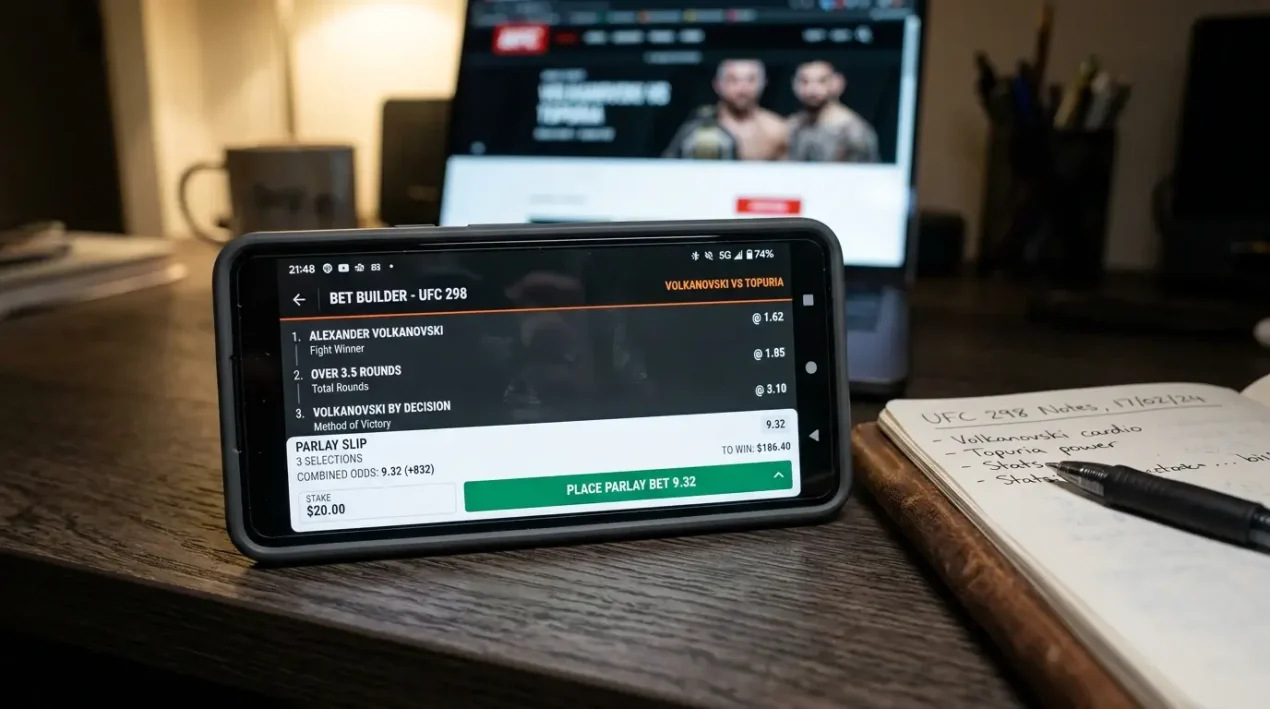
The concept is simple. The execution is not. Some combinations pay generously because the bookmaker treats them as independent when they are actually correlated. Others pay poorly because the platform’s algorithm already accounts for the relationship between your selections. Understanding which legs support each other and which ones work against each other is the difference between a same fight parlay that carries genuine edge and one that is just an expensive accumulator with fewer legs.
SGP Strategy Mechanics: Distinguishing Correlated and Uncorrelated Legs
The word “correlation” comes up constantly in same fight parlay discussions, but I rarely hear it explained in a way that actually helps someone build a better bet.
Two legs are correlated when one outcome makes the other more likely. If you pick Fighter A to win and also pick “KO/TKO” as the method of victory, those legs are positively correlated — if Fighter A is a knockout artist, both selections become more probable together than either would be alone. The bookmaker knows this and adjusts the combined price downward, which means your payout is lower than if you had multiplied the individual odds. The adjustment varies by platform, and some are more aggressive about it than others.
Partially correlated legs are where the interesting pricing lives. “Fighter A to win” combined with “over 2.5 rounds” creates a mild positive correlation if Fighter A is a decision specialist, but a mild negative correlation if Fighter A is a first-round finisher. The platform’s algorithm has to decide which scenario applies, and it often splits the difference — pricing the combination as if the legs are roughly independent. When your analysis tells you the correlation is stronger in one direction than the algorithm assumes, you have found a pricing gap.
Negatively correlated legs are the trap. “Fighter A to win” combined with “under 1.5 rounds” and “decision” is mathematically impossible — a decision requires the fight to reach the judges, which means it must go the full distance, not end under 1.5 rounds. Most platforms will reject this combination outright, but subtler negative correlations slip through. Combining a grappler to win with a high over/under line can be negatively correlated if the grappler’s path to victory is a quick submission — the fight ending early means the over does not hit.
I always map the logical relationship between my legs before checking the price. If I cannot explain in plain English why both legs should hit together, I do not include them in the same fight parlay.
Three Sample Same Fight Parlay Constructions
Theory only takes you so far. Here are three constructions I have used repeatedly, each built around a different fighter archetype and the divisional data that supports it.
The Heavyweight Knockout Special. Heavyweight bouts produce knockouts at a rate of 62% — the highest in the UFC. When a heavyweight power puncher faces an opponent with poor takedown defence and limited head movement, I build the following: heavyweight favourite to win, KO/TKO as method, under 2.5 rounds. All three legs are positively correlated: the fighter who knocks people out is likely to win, likely to win by KO, and likely to do it quickly. The combined price is reduced by the platform’s correlation adjustment, but the raw probability of all three hitting is high enough that the adjusted price still offers value. I have cashed this construction more times than any other same fight parlay format.
The Grappler’s Submission Route. When a high-level Brazilian jiu-jitsu practitioner faces a striker with known submission vulnerability, the construction changes: grappler to win, submission as method, over 1.5 rounds. The first two legs are strongly correlated — if the grappler wins, it is most likely by submission. The over 1.5 rounds leg adds value because submission finishes rarely happen in the first round; they typically require the grappler to secure a takedown, transition to a dominant position, and work for the choke or lock, which usually takes at least a full round to develop.
The Decision Grind. In the lighter weight classes — particularly women’s strawweight, where 68% of bouts go to decision — I look for matchups between two fighters with strong takedown defence and high strike volume but low finishing rates. The construction: favourite to win, decision as method, over 2.5 rounds. This is the most correlated of the three constructions — a decision literally requires the fight to go the distance, so the over 2.5 is almost a given. Platforms price this aggressively, but the combined price can still clear the value threshold when both fighters genuinely lack finishing ability. For a comparison with multi-fight structures, the accumulator guide covers the broader approach.
Which UK Platforms Offer UFC Bet Builders
Not every UK bookmaker calls this market by the same name, and the feature set varies more than you might expect.
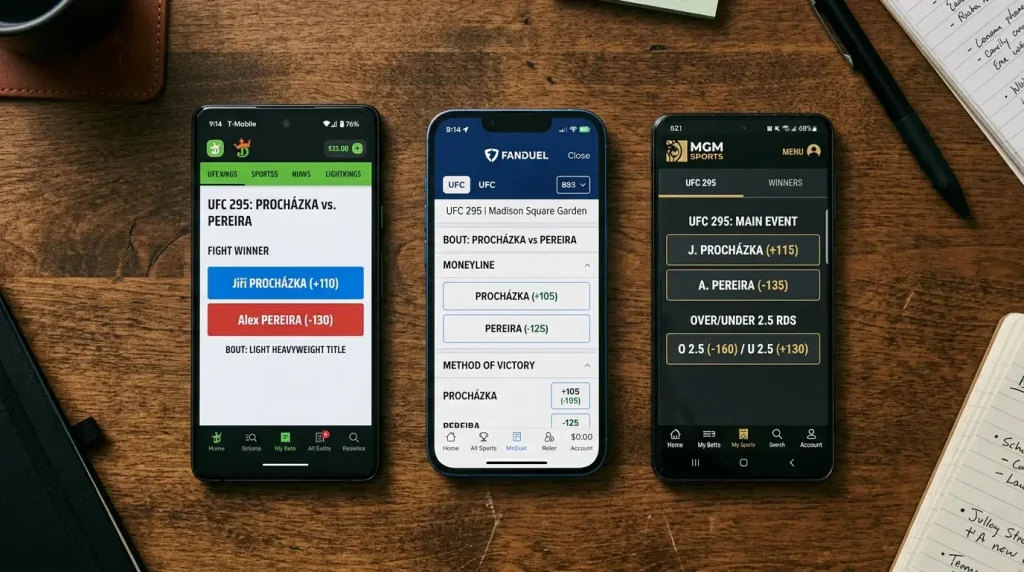
Bet builders — the UK platform equivalent of the American “same game parlay” — are now available on most major UK betting sites for UFC events. The feature allows you to combine multiple selections from the same fight into a single slip, with the platform calculating the combined odds automatically. The correlation adjustments happen behind the scenes, which means you never see the individual odds multiplied — only the final combined price.
The key differences between platforms are in scope and flexibility. Some bookmakers allow you to combine moneyline, method, and round totals but not fighter props like “total significant strikes.” Others offer a wider menu that includes performance props, giving you more legs to work with. The platforms that offer the broadest selection tend to have the most aggressive correlation adjustments, which partially offsets the additional flexibility.
I maintain accounts with at least three bookmakers for same fight parlays specifically. The combined odds on identical constructions can vary by 10–15% between platforms, which is a significant edge over the course of a year. Before placing any same fight parlay, I build the same combination on every available platform and take the best price. This is the same line-shopping principle that applies to moneyline and over/under betting, but the payoff is even larger because the margins on combined bets are wider.
One practical note: most platforms require a minimum of two legs in a same fight parlay, and some cap it at three or four. If your construction requires five legs, you may need to strip it back or split it across two separate bets. Complexity does not equal value — some of my most profitable same fight parlays have been simple two-leg combinations where the correlation was strong and the pricing was soft.
Same Fight Parlay Questions
Two questions that surface every time I discuss this market with fellow punters.
Do correlated UFC same fight parlay legs pay less than independent ones?
Yes. When a platform detects that two legs are positively correlated — such as a fighter winning and winning by KO — it reduces the combined payout below what you would get by multiplying the individual odds. The reduction varies by platform and by the strength of the correlation. This adjustment is why line shopping across multiple bookmakers matters even more for same fight parlays than for standard bets.
Can I add round betting to a UFC same fight parlay?
On most UK platforms, yes. You can typically add exact round finish or grouped round selections (rounds 1-2, rounds 3-5) to a same fight parlay alongside moneyline and method of victory. However, some platforms restrict certain combinations — for example, pairing exact round finish with method of victory may not be allowed because the round finish already implies the method. Check your platform’s bet builder interface to see which combinations are available.
This material was created by the OCTAPICKS team.
Related posts
UK UFC Audience Demographics and Betting Market Growth
UFC Betting Record Keeping and ROI Tracking