UFC Betting Rules and Sportsbook Settlement Terms
 Available in US
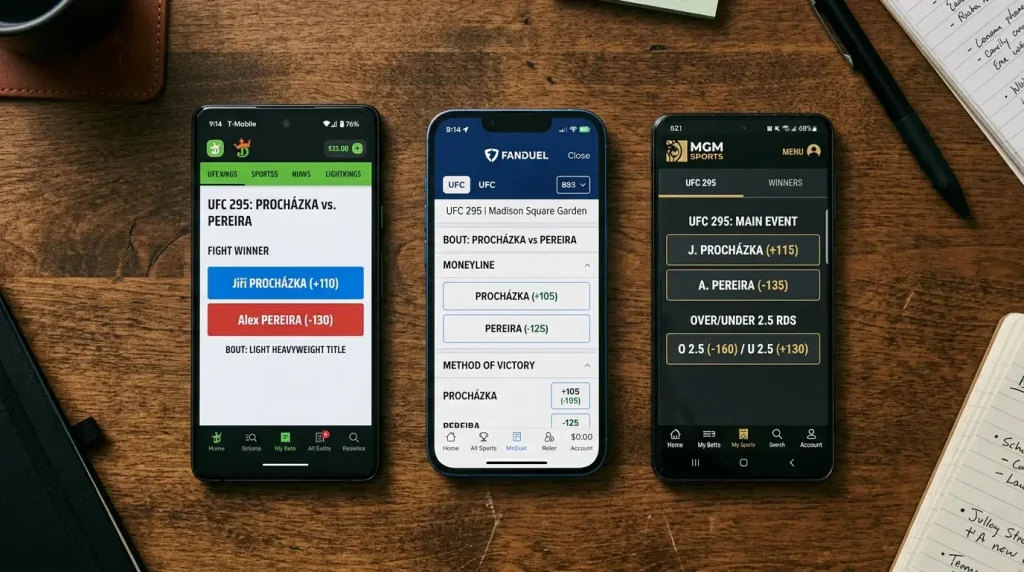
UFC betting rules are not universal. Each bookmaker interprets edge cases differently, and the UFC itself has its own set of competitive rules that interact with — but do not dictate — how your bet settles. This guide walks through the three scenarios most likely to affect your wagers: No Contest results, draws, and fight cancellations.
No Contest Betting Rules: When UFC Fights Are Voided
Have you ever watched a fight end because of something neither fighter intended? That is usually where a No Contest ruling begins, and it is the single most confusing outcome for bettors.
A No Contest occurs when a fight is stopped without a winner being declared. The most common cause is an accidental foul — typically a headbutt or an eye poke — that leaves one fighter unable to continue before a certain point in the bout. Under the Unified Rules of MMA, if the accidental foul occurs before the fight has passed the halfway point (before the start of round three in a three-round fight, or before round four in a five-round fight), the result is a No Contest. If it happens after the halfway point, the fight goes to the scorecards as a technical decision.
For bettors, a No Contest almost always means voided stakes. Most UK bookmakers return your money as if the fight never happened. Moneyline bets are refunded, round totals are voided, and method of victory bets are returned. However — and this is the part that catches people — the definition of “void” varies by platform. Some bookmakers void all markets on a No Contest. Others void the moneyline but settle method of victory as a loss, because a No Contest is technically not a KO, submission, or decision.
The Dulgarian incident showed how integrity concerns add another layer. When three bookmakers refunded all bets on a fight due to suspicious activity, that was a discretionary decision — not a standard rule. Those refunds were a response to potential match manipulation, and they required individual bookmaker action rather than automatic settlement. If you had a bet on that fight with a fourth bookmaker who chose not to refund, your bet would have settled normally under their standard No Contest policy.
My advice: before placing any UFC bet, check your bookmaker’s specific void policy in their terms and conditions. It takes two minutes and can save you genuine confusion on fight night.
Draw and Majority Draw: Void or Loss?
Draws in the UFC are rare — fewer than 2% of fights end this way — but when they happen, the settlement rules can feel arbitrary if you have not prepared for them.
A standard draw occurs when the scorecards are level after three or five rounds. A majority draw happens when two judges score the fight even and one judge picks a winner. In both cases, no fighter is declared the winner, which creates a problem for moneyline bets that require you to pick one.
Here is where bookmaker differences become sharp. Some UK platforms void moneyline bets on a draw, returning your stake in full. Others settle moneyline bets as a loss for both sides, since neither fighter technically won. The distinction is significant, and it is buried in the terms and conditions rather than displayed prominently on the betting slip.
Method of victory bets behave more predictably on draws. A draw is not a KO, not a submission, and not a decision win — so method bets typically settle as losses across all platforms. Round total bets usually stand, because the fight was completed (unless the draw resulted from a technical stoppage). Over/under markets on total rounds generally settle based on the actual duration of the fight, regardless of the scoring outcome.
For accumulators, a draw on one leg follows the same logic as the individual bet. If your bookmaker voids moneyline on a draw, that leg drops from your acca and the remaining legs are recalculated. If your bookmaker treats it as a loss, your entire acca loses. This is one of those bet type nuances that is worth understanding before you build a multi-fight slip.
Fight Cancellations and Postponements
The call came at 6am on fight day: the main event was off. Injury during warm-ups. My biggest bet of the month — gone before the arena doors even opened.
Fight cancellations are more common in the UFC than in most sports. Injuries, failed weight cuts, illness, and last-minute medical issues can pull a fighter from the card with minimal notice. When that happens, all bets on the cancelled fight are voided and stakes returned. This is universal across UK bookmakers — if the fight does not happen, your money comes back.
The complication arrives with accumulators. If one leg of your acca is cancelled, the bet is typically restructured as if that leg never existed. A four-fold becomes a treble, and the payout adjusts accordingly. Some bettors find this acceptable; others find it frustrating, because the acca was built with four specific selections in mind and removing one changes the risk profile entirely. There is no way around this — cancellations are part of the sport, and accumulators absorb them automatically.
Failed weight cuts introduce a subtler issue. When a fighter misses weight, the bout often proceeds as a catchweight fight, but the conditions change: the fighter who missed weight forfeits 20–30% of their purse, and title implications are removed. Most bookmakers still honour bets on catchweight fights, but some platforms void specific props — particularly “fighter to make weight” markets, which are offered on some UK books. Check your bookmaker’s stance before fight week if you are betting on a fighter with a history of difficult weight cuts.
Postponements — where the entire event is rescheduled rather than cancelled — follow different rules again. Some bookmakers keep bets active through a postponement if the event is rescheduled within a certain window (often 48 to 72 hours). Others void all bets immediately and let you re-bet at new odds once the rescheduled event is confirmed. The pandemic era made this distinction painfully relevant, and the policies established then still govern how most books handle postponements today.
Rules Questions
Two questions that come up every time a fight ends in unusual circumstances.
What happens to my bet if a UFC fight is stopped due to an accidental headbutt?
If the fight is stopped before the halfway point due to an accidental foul, it is typically ruled a No Contest. Most UK bookmakers void all bets and return your stake. If the stoppage happens after the halfway point, the fight goes to the scorecards as a technical decision, and bets settle on that result. Always check your bookmaker’s specific void policy, as settlement rules vary by platform.
Do all UK bookmakers void moneyline bets if a UFC fight ends in a draw?
No. Some UK bookmakers void moneyline bets on a draw and return your stake, while others settle them as a loss for both sides. The policy is set by each individual bookmaker and is found in their terms and conditions. If you bet on fights where a draw is a realistic possibility, check the policy before placing your wager.
This material was created by the OCTAPICKS team.
Related posts
UK UFC Audience Demographics and Betting Market Growth

UFC Betting Record Keeping and ROI Tracking