
UFC Fight Night Betting and Non-PPV Market Odds
 Available in US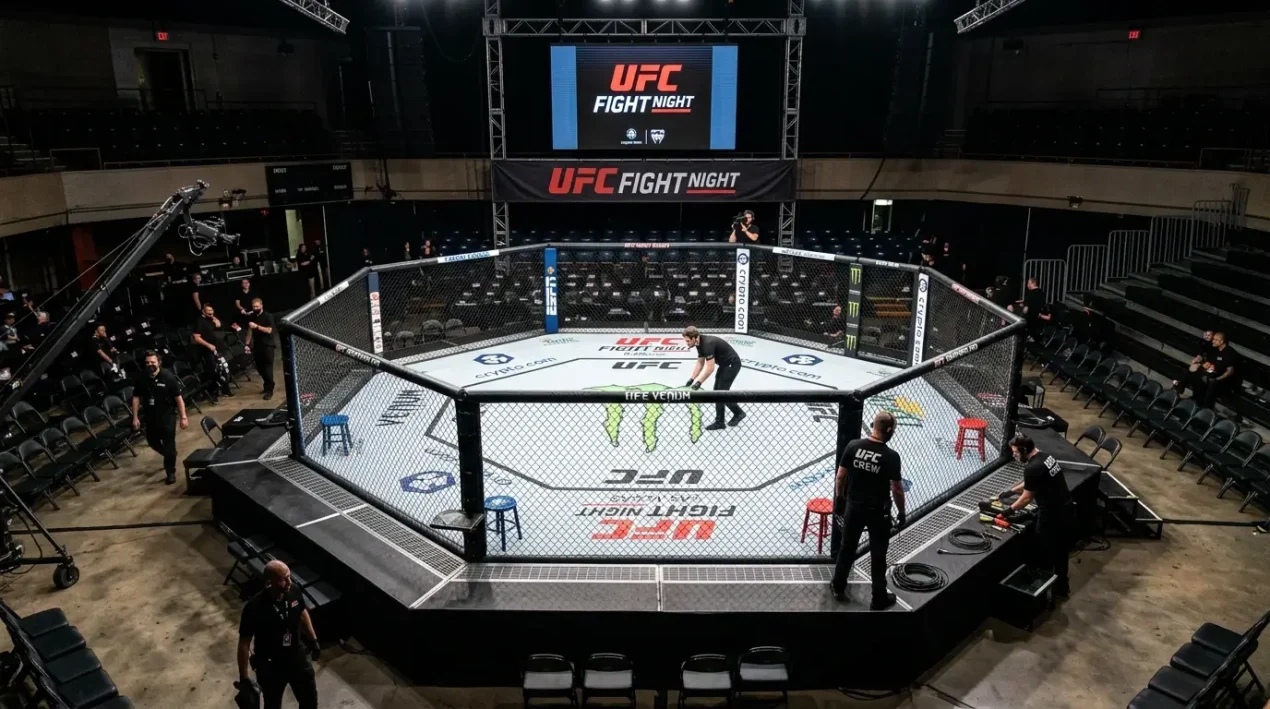
Most recreational punters still gravitate towards championship cards. They recognise the names, they have seen the press conferences, and they feel comfortable backing a fighter who has been plastered across social media for weeks. That leaves Fight Nights in a curious position – fully televised, globally available, yet underserved by the betting public. In six years of building my bankroll, some of my best months have come almost entirely from non-PPV cards. This article breaks down why Fight Night odds behave differently, where the value sits, and what traps to avoid when liquidity thins out.
UFC Event Structures: Key Differences for Fight Night Betting
A mate once asked me why I was so excited about a card with zero title fights. I pulled up the odds and showed him – three of the five main-card bouts had lines that would never survive on a numbered event. That is the structural gift Fight Nights hand you.
The most obvious difference is roster depth. Fight Night cards lean heavily on unranked fighters, regional prospects, and veterans on the fringes of the top fifteen. These athletes have smaller public profiles, which means less media coverage, fewer breakdowns on YouTube, and – crucially – less data baked into the opening lines. Bookmakers still price these bouts, but they do so with thinner information and lower confidence than when they are setting odds on a champion everyone has watched for years.
Main events on Fight Nights are scheduled for five rounds, same as championship bouts, but the undercard fights are three-rounders with no title implications. That distinction matters for round totals. A three-round fight between two aggressive strikers can still go the distance, but the compressed format changes the maths on over/under markets. You are working with 15 minutes of cage time instead of 25, and each round carries proportionally more weight in your handicapping.
Card composition also tends to feature more stylistic mismatches. Numbered events stack multiple high-profile, closely-matched bouts to justify the production budget. Fight Nights fill their slots from a wider talent pool, which regularly produces lopsided matchups that the market either overvalues or undervalues depending on name recognition. I have seen debuting fighters priced as heavy underdogs against ageing gatekeepers, only to dominate from the opening bell – the market simply did not know enough about them to set a fair line.
The broadcast window matters too. Fight Night cards air at consistent times on ESPN or Paramount+, often on a Saturday afternoon in the UK. The regularity is useful for bettors who like routine, but it also means these events compete with Premier League fixtures and other mainstream sport for attention. The casual MMA fan picks the football. The serious bettor picks the Fight Night.
Why Fight Nights Offer Underpriced Lines
Last year I tracked every underdog result across all UFC events, splitting the data by card type. The pattern was stark – Fight Night underdogs cashed at a noticeably higher rate than their numbered-event counterparts. That lines up with the broader trend: underdogs at +200 or longer won 39% of fights in 2024, well above the historical average of 28%. A chunk of that uplift comes directly from non-PPV cards, where the market has fewer eyeballs correcting its mistakes.
The mechanism is straightforward. Public money drives lines. On a championship card headlined by a household name, millions of casual bets flood in, and the books adjust accordingly – those lines get sharp fast. On a Fight Night headlined by a ranked contender most people could not pick out of a lineup, the volume drops. Lower volume means the opening line stays closer to its original position, and any inefficiency the oddsmakers introduced at the start persists deeper into fight week.
Where I find the most consistent value is in the prop markets. Method of victory, round betting, and fight-to-go-the-distance all get less attention on Fight Nights. The books still offer them, but the limits are lower and the spreads wider. If you have done your film study – watched training footage, checked the grappling credentials, understood the pace each fighter sets – you can often find props that feel mispriced by a full tier. A fighter with elite wrestling control priced at even money to win by decision, on a card nobody is watching closely, is exactly the kind of spot that keeps me coming back to numbered events betting comparisons to sharpen my own process.
One caveat: value does not mean certainty. Fight Nights feature more unknowns, and unknowns cut both ways. A debuting fighter might be wildly talented or wildly unprepared – the line cannot tell you which. Staking discipline matters more on these cards precisely because the information gap is wider. I keep my unit size smaller on Fight Night props than I do on championship-card moneylines, and I suggest you do the same until your tracking data tells you otherwise.
Market Liquidity and Late Line Movement on Fight Nights
The first time I tried to place a decent-sized bet on a Fight Night prelim, the book moved the line before I could confirm the slip. That taught me more about liquidity than any textbook ever could.
Market liquidity on Fight Nights is genuinely thinner. Fewer bettors means each individual wager carries more weight in the pool, and the books respond by widening their margins or lowering their maximum stakes. If you are used to placing bets on championship main events and then shift to a Tuesday-night Fight Night undercard, you will feel the difference immediately. Lines move on smaller amounts, and they move fast – especially in the final 24 hours before the event.
Late line movement on Fight Nights can be misleading. On a numbered event, a sharp move in the last few hours usually signals informed money – professionals who have been waiting for the right price. On a Fight Night, that same move might just be one moderately sized bet from a recreational punter who happened to like one fighter’s Instagram post. The signal-to-noise ratio drops, and reading line movement becomes more of an art than a science.
My approach is to place Fight Night bets earlier in the week than I would for bigger cards. I want to capture the opening line before low-volume noise starts pushing it around. If I see a line I like on Monday for a Saturday Fight Night, I take it. Waiting for “a better number” on these cards is a gamble in itself, because the line is just as likely to move against you on a single bet as it is to drift in your favour. The liquidity simply is not deep enough to smooth things out the way it does on a pay-per-view headliner.
Fight Night Questions
Two questions come up constantly when I talk to fellow bettors about Fight Night cards. Both deserve a direct answer.
Are UFC Fight Night odds less accurate than numbered event odds?
They tend to be, yes. Fight Night cards feature less-known fighters and attract fewer bets, which means the market has less information to work with and less volume to correct early mistakes. That is exactly why value opportunities appear more often on these cards – the odds reflect thinner analysis from both bookmakers and the public.
Do all UK bookmakers cover every UFC Fight Night?
Most major UK-licensed bookmakers cover the full main card of every Fight Night, but prelim coverage varies. Some books only list prelim bouts a day or two before the event, and a few skip the earliest prelims entirely. If you want full-card access, check your bookmaker’s UFC section early in fight week to confirm which bouts are listed.
This material was created by the OCTAPICKS team.
Related posts
UK UFC Audience Demographics and Betting Market Growth

UFC Betting Record Keeping and ROI Tracking