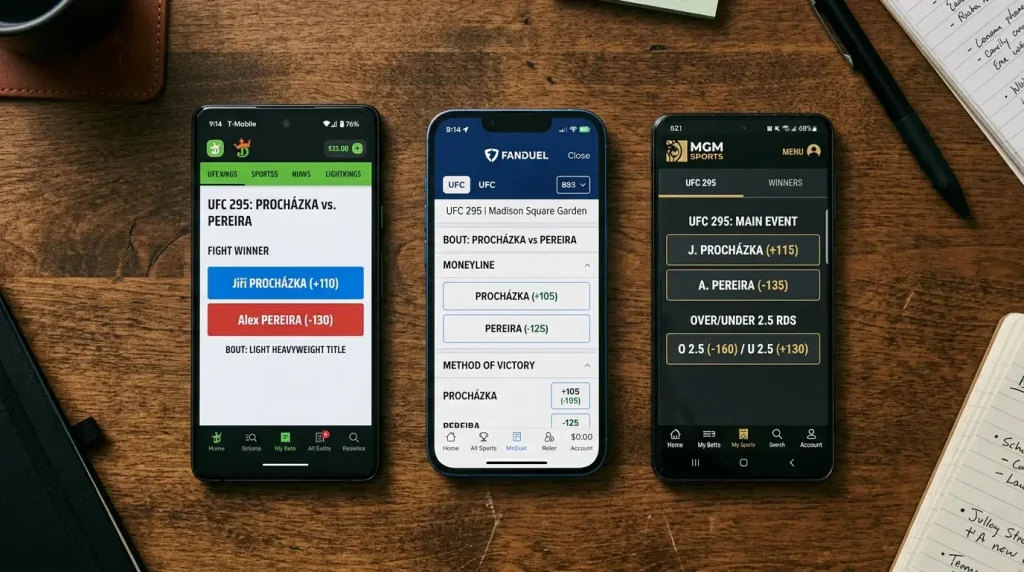
UFC Betting for Beginners and First Bet Guidelines
 Available in US
If you encounter unfamiliar terminology while browsing the sportsbooks, our comprehensive MMA betting glossary will help you understand every market.
UFC Betting Process: Five Steps for First-Time UK Punters
Before you bet a penny, you need a platform. In the UK, every bookmaker offering UFC odds must hold a licence from the UK Gambling Commission. This is not optional – it is the law. A UKGC licence guarantees that your funds are segregated (the bookmaker cannot spend your deposit), that you have access to dispute resolution through IBAS, and that responsible gambling tools are available. Roughly 10% of UK adults place bets, and 13.5 million active online accounts are currently registered with UKGC-licensed operators. You are joining a regulated, protected market.
As Nicholas Smith, SVP and Head of International Business at TKO (UFC’s parent company), put it when announcing the UFC’s European betting partnership: the organisation is deliberately working with reputable partners who have an established fanbase. That same principle should guide your platform choice. Look for a UKGC-licensed site that covers UFC specifically – not just MMA in general – and that offers the markets you will want as you progress: moneyline, method of victory, round totals, and live betting. bet365, Paddy Power, and William Hill all provide solid UFC coverage. NetBet became the official UFC betting partner in the UK in March 2025.
Once you have chosen a platform, creating an account takes five minutes. You will need your name, address, date of birth, and a valid form of identification. Age verification is mandatory – you must be 18 or older. Deposit methods include debit card, bank transfer, and e-wallets like PayPal or Skrill. Start with an amount you are genuinely comfortable losing entirely. Twenty pounds is fine. Fifty is fine. Whatever the number, it should be money that will not affect your life if it disappears.
Finding the UFC event is straightforward on any major platform. Navigate to the sports section, look for MMA or UFC, and you will see the upcoming card listed with all available fights. Click on the fight you want to bet on, and the available markets will appear. For your first bet, start with moneyline – picking the winner. Select the fighter you want to back, enter your stake, and confirm. Your bet slip will show the potential return. Take a breath, check the numbers, and press confirm. That is it. You have placed your first UFC bet.
To understand what the odds numbers actually mean and how to calculate your return, the odds explained guide walks through every format step by step.
The Safest Bet Types for Your First UFC Card
I tell every beginner the same thing: start with moneyline. It is the simplest possible bet – you pick the winner, and if they win by any method (knockout, submission, or decision), your bet lands. There is no need to predict how the fight ends or how long it lasts. You are betting on one thing: who walks out of the octagon with their hand raised. The simplicity makes it the ideal learning ground because you can focus entirely on fighter analysis without worrying about secondary variables.
For your first card, pick one or two fights where you feel genuinely informed. Do not bet every fight on the card. The temptation is real, especially during a numbered event when twelve fights are running back to back, but spreading thin across fights you have not researched is the fastest way to lose your starting bankroll. Quality over quantity applies here more than almost anywhere else in betting.
Once you are comfortable with moneyline, over/under rounds is the natural second step. Instead of picking a winner, you are predicting whether the fight will last longer or shorter than a set number of rounds. This bet type introduces you to a different kind of analysis – fighter finishing rates, divisional tendencies, cardio profiles – without adding the complexity of method-specific markets. It also teaches you to think about fights differently: not just who wins, but how the fight unfolds.
Leave method of victory, round betting, and prop bets until you have a few cards’ worth of experience. These markets offer better value for informed bettors, but they also carry wider bookmaker margins and require deeper knowledge of fighter tendencies. Jumping into them too early is like skipping the shallow end of the pool because the deep end looks more exciting. You will get there. Take the steps in order.
Start your wagering journey safely by relying on the best UFC odds comparison site tailored for British fans.
Five First-Timer Pitfalls (and How to Side-Step Them)
Name recognition is the first trap and the one that catches more beginners than anything else. You have watched a fighter’s highlight reel, you have seen them on social media, and their name feels like a safe bet. But name recognition is not analysis. A well-known fighter coming off a layoff, moving up in weight class, or facing a stylistic nightmare can lose just as readily as any unknown prelim fighter. Always check recent form, opponent quality, and the specific matchup before you back a name.
Chasing losses is the second trap, and it is the dangerous one. You lose your first bet, and the immediate instinct is to double the stake on the next fight to “win it back.” This is exactly how bankrolls evaporate. Each bet is an independent event. The previous loss has no influence on the next outcome. If you lose your first bet, the correct response is to bet the same unit size on your next pick, not to escalate.
Having no bankroll plan is trap number three. If you deposited fifty pounds, what is your unit size? How much do you bet per fight? Without a plan, you will make emotional decisions. A simple starting framework: one unit equals 2-5% of your bankroll. If your bankroll is GBP 50, one unit is GBP 1 to GBP 2.50. That feels small, and it should. Small bets keep you in the game long enough to learn.
Ignoring odds format is the fourth trap. UK bookmakers default to fractional odds (4/7, 5/2), but many UFC resources use decimal or American formats. If you do not know how to convert between them, you will misjudge your potential return or, worse, misunderstand the implied probability of your pick. Spend ten minutes learning the conversion before your first bet. It is the highest-return ten minutes you will invest.
Betting every fight is the fifth trap. A full UFC card has 12-15 fights. You do not need to have action on all of them. Professional bettors I know sometimes bet two or three fights per card and skip the rest entirely. Selectivity is a skill, and it is one that beginners rarely possess because the excitement of a live event makes every fight feel like an opportunity. Most of them are not. The fights where you have a genuine informational edge are the only ones that deserve your money.
Your First Card Is a Lesson, Not a Payday
Approach your first UFC betting experience as an education, not an investment. Track what you bet, why you bet it, and what happened. Write it down – even a note on your phone is enough. After three or four cards, review your decisions. You will see patterns: the types of fights where your analysis was right, the traps you fell into, the bets that felt good but were actually poorly reasoned. That feedback loop is what turns a casual punter into a competent one, and it starts with the very first bet you place.
How much money do I need to start betting on UFC in the UK?
You can start with as little as GBP 10-20 at most UKGC-licensed bookmakers. The minimum deposit varies by platform but is typically between GBP 5 and GBP 10. More important than the amount is the mindset: only deposit money you are comfortable losing entirely. A GBP 50 bankroll with GBP 1-2 unit sizes gives you enough runway to learn across several fight cards without significant financial risk.
Can I bet on UFC from my phone in the UK?
Yes. All major UKGC-licensed bookmakers offer mobile apps for iOS and Android, and most also have fully functional mobile websites. Mobile is actually the dominant way UK punters bet on UFC, since fights typically air on Saturday evenings and many bettors watch on television while placing bets from their phones. The apps support all bet types including live in-play wagering during fights.
This material was created by the OCTAPICKS team.
Related posts

UK UFC Audience Demographics and Betting Market Growth
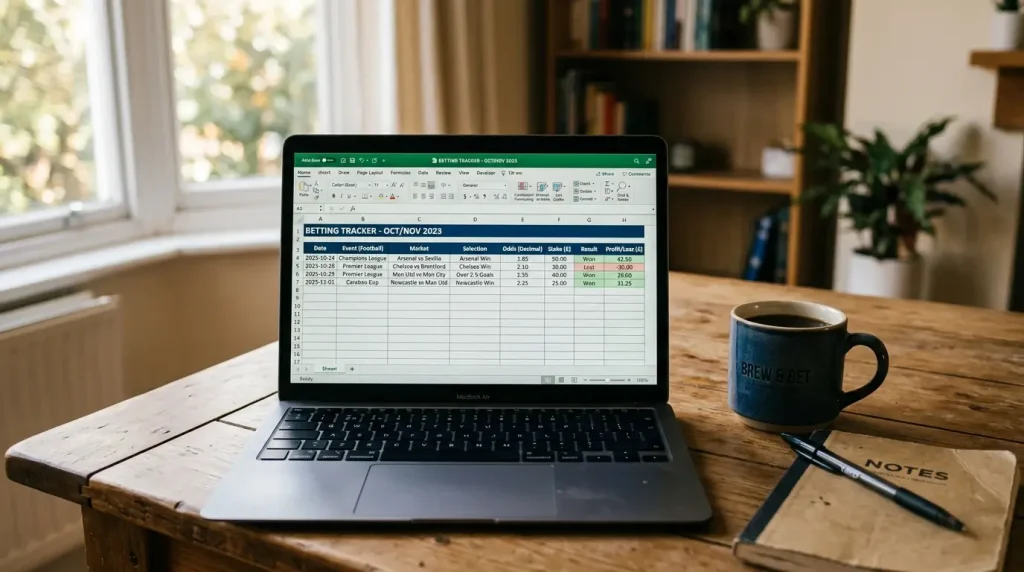
UFC Betting Record Keeping and ROI Tracking