
Legal UFC Betting and UKGC Regulations
 Available in US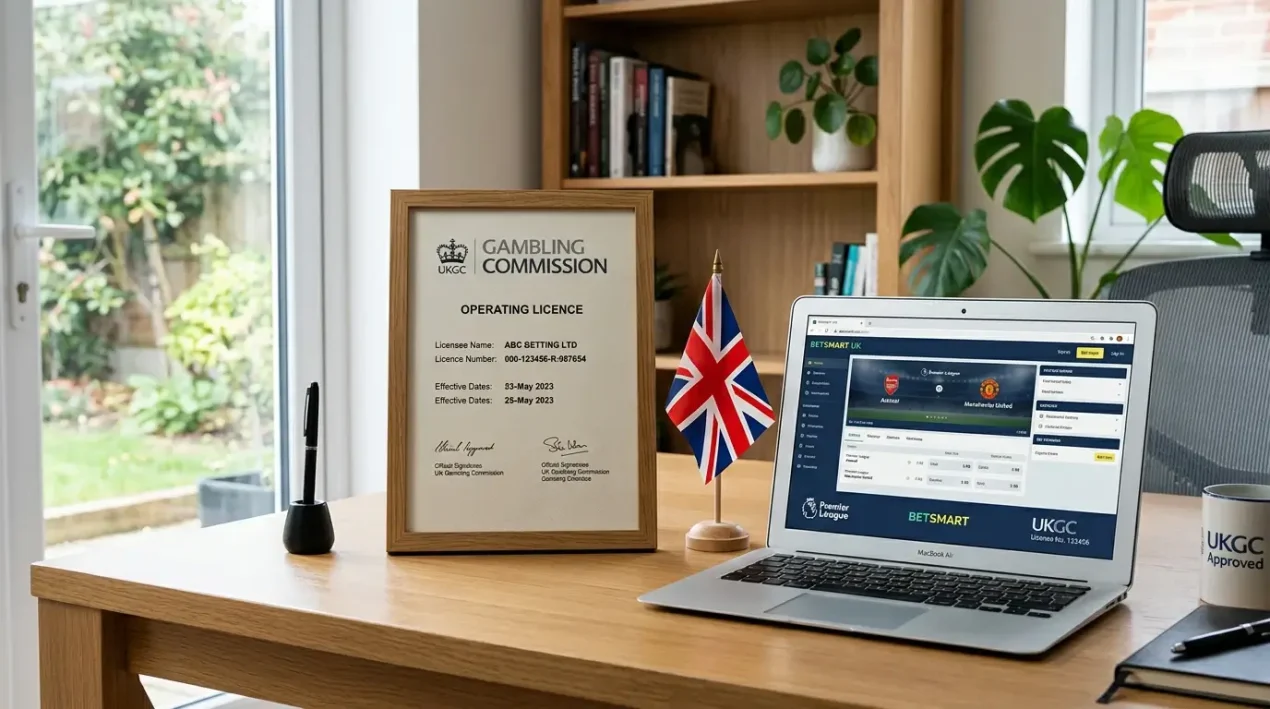
This guide covers the legal framework, your specific rights as a punter, and the player protection requirements that every UKGC-licensed platform must meet.
UK Gambling Act 2005: Regulatory Framework for UFC Betting
I remember trying to explain to a colleague that UFC betting was regulated by the same body that oversees Premier League betting. He did not believe me until I showed him the UKGC’s own documentation. The perception that MMA exists in some kind of regulatory grey area is persistent and completely wrong.
The Gambling Act 2005 is the primary legislation governing all commercial gambling in the United Kingdom. It established the UK Gambling Commission as the regulator and defined the legal framework for licensing, consumer protection, and enforcement. Under the Act, any operator offering gambling services to UK consumers must hold a UKGC licence, regardless of where the operator is based. This applies to all sports betting, including MMA and UFC-specific markets.
The Act does not distinguish between sports — football, horse racing, boxing, and mixed martial arts are all classified as sporting events eligible for licensed betting. The UKGC’s remit is to ensure that gambling is conducted fairly and openly, that children and vulnerable people are protected, and that gambling is kept free from criminal activity. These objectives apply to every UFC bet placed on a UKGC-licensed platform with the same force as they apply to a Premier League accumulator.
The remote gambling provisions of the Act — updated through the Gambling (Licensing and Advertising) Act 2014 — require that any operator targeting UK customers must hold a UKGC licence, even if the company is headquartered overseas. This is directly relevant to UFC betting because several major MMA sportsbooks are based in jurisdictions like Malta, Gibraltar, or the Isle of Man. If they accept UK customers, they must comply with UKGC rules. If they do not hold a UKGC licence, it is illegal for them to offer services to UK residents — and punters who use unlicensed platforms forfeit the consumer protections that the law provides.
The UK’s total remote gambling sector — covering online casino, betting, and bingo — generated gross gambling yield of £7.8 billion in the year to March 2025, an increase of 13.1% year-on-year. That figure represents one of the most regulated and closely monitored gambling markets in the world, and every pound wagered on UFC fights within it falls under the same regulatory umbrella.
Your Rights as a UK UFC Bettor
Legal protection means nothing if you do not know what you are entitled to. Here are the rights that the law guarantees every UK punter who uses a UKGC-licensed platform.
Tax-free winnings are the most immediately relevant. In the UK, betting duty is paid by the operator, not the customer. You pay no income tax, capital gains tax, or any other tax on your UFC betting profits. This has been the case since 2001, when the point of taxation shifted from the punter to the bookmaker. It means that if you win £10,000 on a UFC accumulator, you keep £10,000. There is no reporting obligation and no deduction. This is a significant advantage over many other jurisdictions where bettors pay tax on net winnings.
Fund segregation is the protection most bettors never think about until they need it. UKGC-licensed operators are required to keep customer funds separate from operational funds. The level of protection varies by licence condition — some operators hold customer funds in fully segregated trust accounts, while others use medium or basic protection levels. You can check your operator’s fund protection level on the UKGC’s licence register. In the event that a bookmaker becomes insolvent, the level of fund segregation determines how much of your balance is recoverable.
Dispute resolution through the Independent Betting Adjudication Service (IBAS) is available to all customers of UKGC-licensed operators. If you believe a bet has been settled incorrectly, if an operator has refused to pay winnings, or if any other dispute arises, you can escalate to IBAS after exhausting the operator’s internal complaints process. IBAS decisions are binding on the operator, which means they provide a genuine enforcement mechanism that unlicensed platforms do not offer.
Player Protection Requirements Under UKGC
With approximately 13.5 million active online betting accounts in the UK, the scale of player protection is enormous — and the requirements on operators are detailed and enforced through regular audits.
Age verification is absolute. No one under 18 may open a betting account, and UKGC-licensed operators must verify the age and identity of every customer before allowing them to place a bet or withdraw funds. This is typically done through automated identity checks using third-party verification services. If your identity cannot be verified electronically, you will be asked to provide documentary evidence — a passport, driving licence, or utility bill. The process can feel intrusive, but it exists to prevent underage gambling and money laundering.
Affordability checks have become more prominent in recent years. The UKGC requires operators to monitor customer spending patterns and intervene when spending appears disproportionate to a customer’s likely financial resources. This has led to enhanced due diligence on high-volume bettors — including requests for proof of income or source of funds. These checks are sometimes controversial among experienced bettors, but they are a regulatory requirement that applies equally to all sports, including UFC.
Responsible gambling tools — deposit limits, loss limits, session time controls, self-exclusion, and reality checks — are mandatory under UKGC licence conditions. Every platform must offer them, and the responsible gambling guide covers each tool in detail. The key legal point is that these are not optional extras or goodwill gestures — they are regulatory mandates, and an operator that fails to implement them properly faces enforcement action including licence revocation.
Marketing restrictions complete the protection framework. UKGC-licensed operators are prohibited from targeting marketing at self-excluded customers, from presenting gambling as a solution to financial problems, and from creating urgency or pressure in promotional communications. UFC-specific promotions — “bet £10 on tonight’s main event, get £5 in free bets” — must comply with the same advertising standards as any other sports betting promotion.
UK Law Questions
Two questions that cut through the legal complexity to what punters actually want to know.
Do I pay tax on UFC betting winnings in the UK?
No. In the UK, all betting taxes are paid by the operator rather than the customer. Your UFC betting winnings are entirely tax-free — no income tax, no capital gains tax, no reporting requirement. This applies regardless of the amount won, whether from a single bet or accumulated profits over a year.
What should I do if a UKGC-licensed site refuses to pay my UFC winnings?
First, use the operator’s internal complaints process and document everything — screenshots of the bet, settlement details, and all correspondence. If the operator does not resolve the issue to your satisfaction, escalate to the Independent Betting Adjudication Service (IBAS), which is free to use and whose decisions are binding on the operator. You can also report the issue to the UKGC directly if you believe the operator has breached its licence conditions.
This material was created by the OCTAPICKS team.
Related posts

UK UFC Audience Demographics and Betting Market Growth

UFC Betting Record Keeping and ROI Tracking