
UFC Referee Impact on Betting and Fight Outcomes
 Available in US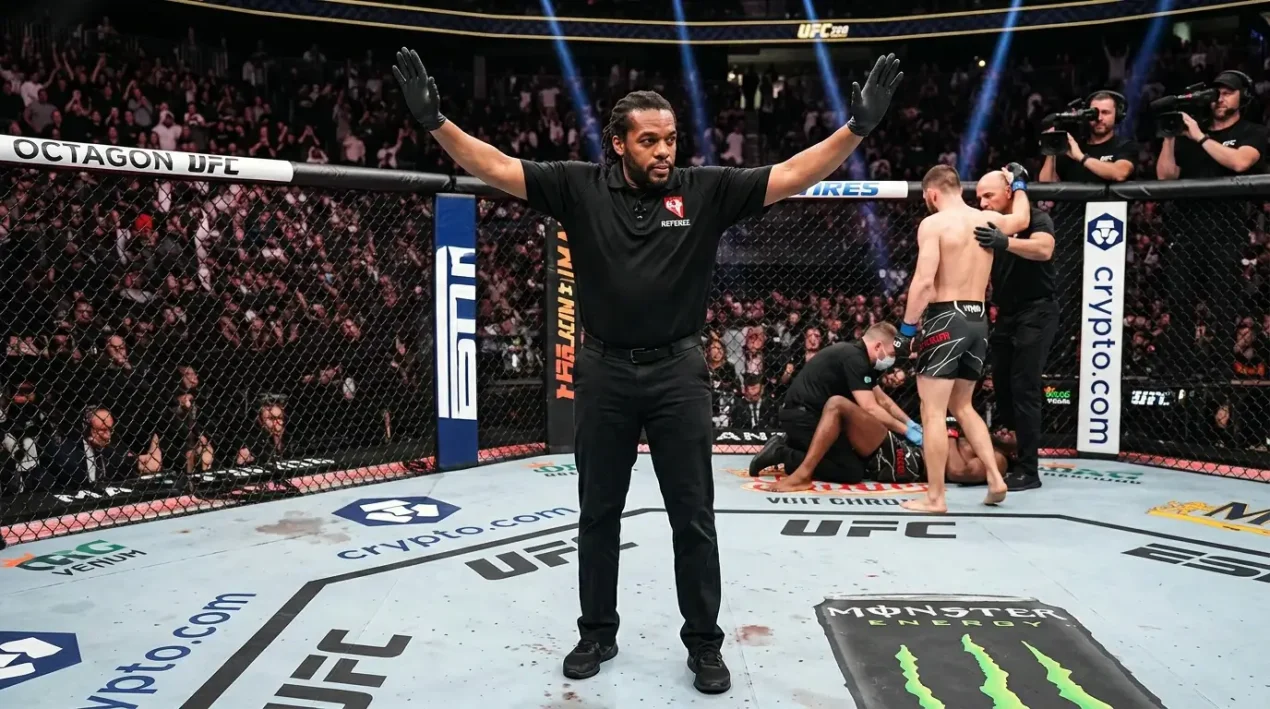
Referees are not interchangeable. They have measurable tendencies — some stop fights early, some let them continue, some stand fighters up quickly from the ground, others allow extended grappling exchanges. These tendencies affect fight duration, method of victory, and ultimately the settlement of your bets. This guide covers how to identify and use those tendencies in your handicapping.
Referee Stoppage Tendencies: Analysing Early vs Late Trends
The first time I built a referee spreadsheet, I was genuinely surprised by the variance. Two experienced referees officiating in the same weight class produced finish rates that differed by more than fifteen percentage points.
Early-stoppage referees tend to jump in at the first sign that a fighter is no longer intelligently defending themselves. They interpret the rules conservatively — if a fighter absorbs three or four unanswered strikes on the ground, the fight is stopped. The effect on betting is direct: fights officiated by early-stoppage referees are more likely to end under the total, and KO/TKO finishes are recorded more frequently because the referee intervenes before a fighter can recover.
Late-stoppage referees take the opposite approach. They give fighters every opportunity to recover, sometimes allowing extended sequences of ground-and-pound that early-stoppage referees would have halted. The result is longer fights, more comebacks, and a higher probability that the fight goes deeper into the scheduled rounds. For bettors, a late-stoppage referee tips the over/under balance towards the over, and it increases the chance that a fight reaches the judges — making decision-method bets more valuable.
The variance is not random. Referees build reputations for their tendencies, and experienced bettors track these patterns across hundreds of fights. A referee who has officiated 200 UFC bouts has a statistically meaningful stoppage profile — their average fight duration, their finish rate, and their ratio of early-to-late stoppages all form a pattern that supplements your fighter analysis.
One nuance that matters: referee tendencies can shift in high-profile situations. A referee who typically allows fights to continue might stop a championship main event slightly earlier to avoid controversy. The pressure of a televised championship card can influence officials just as it influences fighters. I weight the referee’s overall profile most heavily, but I note the fight’s visibility as a secondary factor.
The practical application is straightforward. Before betting any over/under or method of victory market, check who is refereeing the fight. If an early-stoppage referee is assigned to a bout between two heavy-handed strikers, the under becomes significantly more attractive. If a late-stoppage referee is assigned to a grappling-heavy matchup, the over gains value because the referee is less likely to stand the fighters up and more likely to let ground sequences play out.
Stand-Up Frequency: Referees Who Break Up Ground Action
Stoppages are only half the story. The other half is what happens when the fight stays on the ground without a finish — and that is where the stand-up command comes in.
When fighters are on the ground and the action stalls — meaning neither fighter is advancing their position or inflicting damage — the referee has the authority to stand them up and restart the fight on the feet. Some referees exercise this authority aggressively, standing fighters up after fifteen or twenty seconds of inactivity. Others allow ground positions to develop for a minute or more before intervening.
The betting implications are significant. A referee who stands fighters up frequently shifts the fight dynamic towards striking, which increases the probability of a KO/TKO finish. If a wrestler secures a takedown but cannot advance to a finishing position, a quick stand-up returns the fight to the feet — where the striker has the advantage. For bettors, a high-stand-up referee in a striker-versus-grappler matchup tilts the odds towards the striker more than the pre-fight line might suggest.
Conversely, a referee who lets the ground game develop gives grapplers more time to work for submissions and accumulate control time. This favours submission-method bets and, paradoxically, can favour the over — because a patient ground game that fails to produce a submission often leads to a drawn-out fight that reaches the scorecards.
I track stand-up frequency as a ratio: how many stand-ups does a referee issue per fight, on average, divided by the number of takedowns in fights they officiate? A high ratio means the referee actively limits ground time. A low ratio means grappling sequences are allowed to develop. This metric, combined with the fighters’ stylistic profiles, gives me a clearer picture of where the fight will take place — and where the value lies in the prop markets.
Where to Find Referee Assignment and Historical Data
The biggest practical challenge in referee-based handicapping is simply knowing who the referee is — and knowing early enough to use the information.
Referee assignments for UFC events are typically announced during fight week, often on Wednesday or Thursday before a Saturday event. The UFC does not always publicise assignments formally — they sometimes appear first through credentialed media or state athletic commission filings. I check MMADecisions.com and Tapology as my primary sources, both of which track referee assignments and update them as soon as the information becomes available.
Historical referee data is more readily available than most bettors realise. MMADecisions.com maintains a database of referee records that includes every fight they have officiated, the outcome, the method, and the round of the finish. By filtering this data by weight class and time period, you can build a referee profile that accounts for divisional variation — because a referee’s stoppage tendencies in heavyweight may differ from their tendencies in flyweight, where the power dynamic and the pace of damage accumulation are entirely different.
The timing of referee announcements creates a narrow betting window. Lines are typically set on Monday or Tuesday based on fighter profiles alone, without referee information. When the referee is announced mid-week, the line may not adjust — particularly on undercards where the market is less attentive. If your referee analysis suggests a meaningful shift in over/under probability, placing your bet between the announcement and the late-week line correction is the optimal timing. That window is usually 24 to 48 hours, which is enough time for a prepared bettor but not enough for the casual market to react.
Referee Questions
Two questions I field regularly from bettors who are new to referee-based analysis.
When are UFC referee assignments announced?
Referee assignments are typically announced during fight week, usually Wednesday or Thursday before a Saturday event. They appear through state athletic commission filings, credentialed media reports, and tracking sites like MMADecisions.com and Tapology. Assignments are occasionally changed at the last minute due to scheduling conflicts or travel issues, so confirm the referee on fight day before placing referee-dependent bets.
Can referee tendencies really shift UFC over/under odds?
Yes. The variance between early-stoppage and late-stoppage referees is large enough to meaningfully affect over/under probabilities. A referee who consistently stops fights early increases the likelihood of an under result, while one who lets fighters recover and continue pushes outcomes towards the over. Bookmakers rarely adjust lines for referee assignments on undercards, which creates a window of value for bettors who track official tendencies.
This material was created by the OCTAPICKS team.
Related posts

UK UFC Audience Demographics and Betting Market Growth
UFC Betting Record Keeping and ROI Tracking