Responsible UFC Gambling and UKGC Safety Frameworks
 Available in US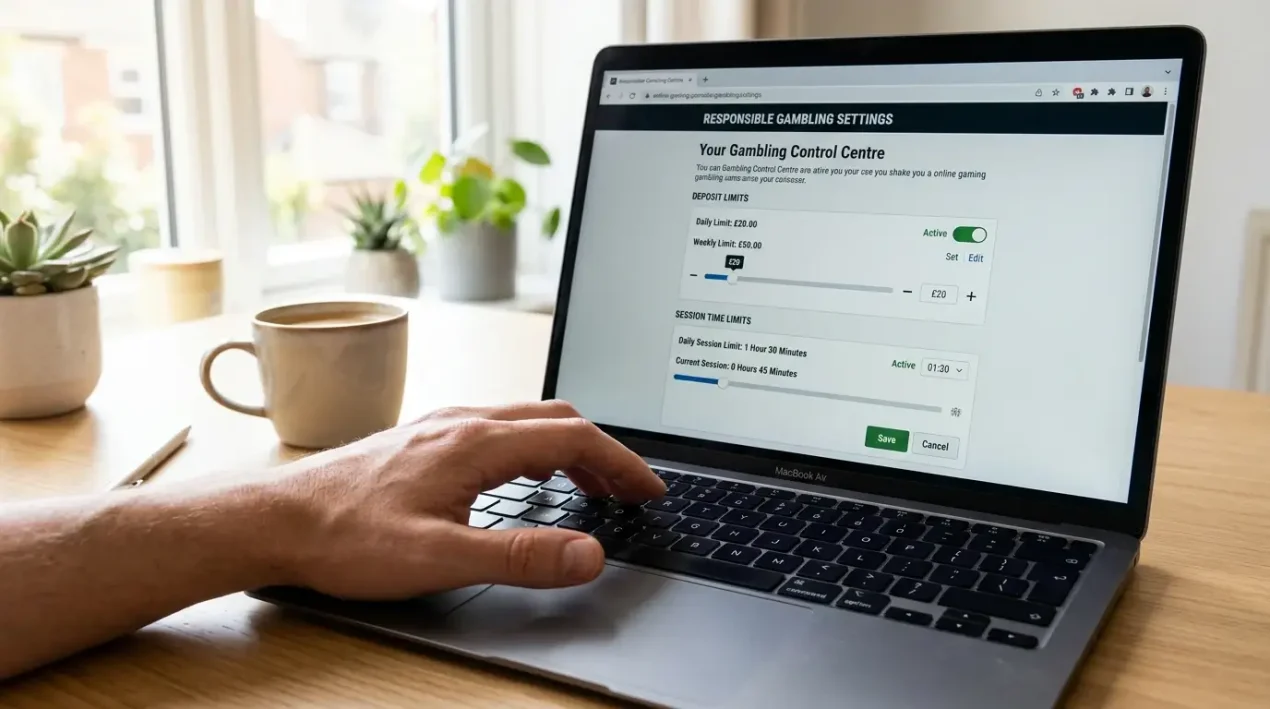
This article is not a lecture. It is a practical guide to the tools that exist to keep your betting within boundaries you set for yourself, and an honest look at the warning signs that suggest those boundaries need tightening.
UKGC Protection Framework: Essential Tools for Responsible Betting
One of the things that surprises newer bettors is how much protection is already built into the platforms they use — most people simply never open the settings page.
Every bookmaker operating under a UK Gambling Commission licence is required to offer a set of responsible gambling tools. These are not optional features — they are regulatory mandates, and a platform that fails to provide them risks losing its licence. With approximately 13.5 million active online betting accounts in the UK as of late 2024, these tools operate at enormous scale, and they exist because the regulator has determined that the industry cannot rely on individual willpower alone.
Deposit limits are the most straightforward. You set a maximum amount you are willing to deposit per day, per week, or per month. Once you hit the limit, the platform blocks further deposits until the period resets. Any decrease to your deposit limit takes effect immediately; any increase requires a cooling-off period — typically 24 to 72 hours — to prevent impulsive decisions during a losing streak. I set my deposit limit at the start of every month and I do not touch it mid-month, regardless of how my results are going.
Loss limits work similarly but track net losses rather than deposits. If you have lost a specified amount within a period, the platform blocks further bets. This is particularly useful for UFC betting because event-night losses can accumulate quickly across multiple fights on a single card. A loss limit acts as an automatic circuit breaker that you do not have to think about in the moment.
Session time limits and reality checks are the tools most bettors overlook. A session limit logs you out after a set duration — one hour, two hours, whatever you choose. Reality checks are pop-up notifications that appear at intervals to show you how long you have been active, how much you have deposited, and your net position. During a UFC event that runs three to four hours, these interruptions force a pause that your own excitement would otherwise skip. When choosing a UK-licensed platform, check that these tools are easily accessible rather than buried in a sub-menu.
Self-Exclusion: GAMSTOP and Individual Platform Options
Sometimes limits are not enough. When betting has moved from entertainment into compulsion, self-exclusion is the mechanism that removes access entirely.
GAMSTOP is the UK’s national multi-operator self-exclusion scheme. When you register with GAMSTOP, every UKGC-licensed online gambling operator is required to block your account. The minimum self-exclusion period is six months, with options for one year and five years. During the exclusion period, you cannot create new accounts, place bets, or receive marketing communications from any participating operator. The system is not perfect — it relies on operators checking the GAMSTOP register, and it does not cover non-UK-licensed sites — but it is the most comprehensive self-exclusion tool available to UK bettors.
Individual platform self-exclusion is a lighter option. Most UK bookmakers allow you to self-exclude from their specific platform without activating GAMSTOP. This is useful if your issue is limited to one site — perhaps a platform where you tend to bet more impulsively due to its live betting interface or its aggressive promotional offers. Single-platform exclusion periods vary but typically range from six months to five years.
A middle ground that I recommend for bettors who want to maintain control without full exclusion is the time-out feature. Most platforms offer short-term time-outs of 24 hours, 48 hours, one week, or one month. If you recognise that you have had a bad night and need a break, a time-out locks your account immediately without the longer-term commitment of self-exclusion. I have used time-outs twice in my betting career — both times after event nights where I deviated from my process — and both times they gave me the space to reset.
Recognising When UFC Betting Becomes a Problem
The hardest part of responsible gambling is recognising that a problem exists while you are inside it. Every bettor I know who developed a problem describes the same experience: it felt normal right up until it did not.
Chasing losses is the most visible warning sign. If you are increasing your stake on the next fight specifically to recover what you lost on the previous one, you have crossed from strategy into compulsion. Chasing is not a conscious decision — it is an emotional reflex that disguises itself as rational thinking. “If I just put a bit more on the main event, I will be back to even” — that sentence, in my experience, is the single most reliable indicator that a bettor needs to step back.
Betting money you cannot afford to lose is the second signal. Your betting bankroll should be entirely separate from your living expenses. If you find yourself calculating whether you can afford rent after a losing weekend, or if you are using credit to fund bets, the line has been crossed. This is not a matter of discipline — it is a structural problem that tools like deposit limits are specifically designed to prevent.
Emotional changes around betting are subtler but equally important. If you notice that you feel anxious when you are not betting, irritable when you cannot watch a card, or secretive about how much you are spending, those are patterns worth paying attention to. UFC’s event schedule — roughly one card per week — means there is always another event coming, which can create a cycle of anticipation and release that mirrors addictive patterns.
If any of this resonates, two organisations offer confidential support. GamCare provides free counselling and practical advice through its helpline and online chat. BeGambleAware offers treatment referrals and self-assessment tools that can help you evaluate your own relationship with betting. Reaching out is not a sign of weakness — it is the same kind of informed decision-making that this entire site is built around.
Responsible Gambling Questions
Two practical questions that bettors ask when they want to take control of their process.
How do I set deposit limits on my UFC betting account?
Log into your betting account and navigate to the responsible gambling or account settings section. Every UKGC-licensed platform is required to offer deposit limit controls — daily, weekly, and monthly options are standard. Set a limit that aligns with your dedicated betting bankroll, not your overall finances. Decreases take effect immediately; increases require a cooling-off period of at least 24 hours.
Can I reverse a GAMSTOP self-exclusion?
Not during the exclusion period you selected — the minimum is six months. Once your chosen period expires, your exclusion does not automatically lift. You must contact GAMSTOP to request removal, and there is a further 24-hour cooling-off period before your accounts are reactivated. This is by design — the process is deliberately not instant to prevent impulsive reversal.
This material was created by the OCTAPICKS team.
Related posts
UK UFC Audience Demographics and Betting Market Growth

UFC Betting Record Keeping and ROI Tracking